Sesame-Crusted Cauliflower Steak with Spicy Sesame White Bean Ragu

image

After I finished roasting cauliflower with these flavors for the first time, my Mom and I ate it all like popcorn, and then went to the market to get two more heads of cauliflower to roast. The aromas in the house were so tantalizingly warm and savory we pretty much wanted to have some roasting all evening long. Enhancing these steaks is a white bean ragu with savory onions, toasted sesame seeds and a drizzle of a quick sesame-chili oil.

~~~~~~~~~
Ingredients
~~~~~~~~~

3 tablespoons sesame oil, to be used separately
2 tablespoons cold water
1 teaspoon toasted sesame seeds
2 tablespoons toasted sesame seeds, ground
1 small red onion
1 tablespoon red pepper flakes, to be used separately
1 teaspoon onion powder, to be used separately
1 teaspoon garlic powder, to be used separately
2 teaspoons salt, to be used separately
1-28 ounce can small white beans or cannellini beans
1 head cauliflower

~~~~~~~~~
Steps
~~~~~~~~~

Preheat the oven to 400 degrees Fahrenheit. Line a sheet pan with parchment paper and set aside.

In a small frying pan, place all but 1 teaspoon of the red pepper flakes along with 1 tablespoon sesame oil. Warm on the lowest heat setting on your stovetop until you are ready to plate, swishing gently from time to time.

Take 2 tablespoons of toasted sesame seeds and grind in a spice or coffee grinder.

Rinse your cauliflower thoroughly, and remove the leaves. Firmly resting the cauliflower by its stem, carefully and slowly slice into the cauliflower top-down to create as many 1″ steaks as possible. Sometimes it breaks apart at the outer edges; its a brittle vegetable and the flavor works just as well for cauliflower pieces.

Arrange the steaks and pieces together on a parchment-lined sheet. Drizzle 1 tablespoon of the sesame oil around the cauliflower and then gently rub it over each piece.

Combine the ground sesame seeds with 1/2 teaspoons of the onion and garlic powder, and 1 teaspoon of salt. Sprinkle half over the cauliflower, and then place the seasoned side face-down on the pan and sprinkle the other half.

Roast for 20 minutes, then flip the cauliflower steaks and pieces over and place back in the oven. Turn down the heat and roast at 300 degrees Fahrenheit for another 20 minutes.

Meanwhile, as the cauliflower roasts, dice your red onion and place it in a medium-size sauce pan along with the remaining 1 tablespoon of sesame oil, 1 teaspoon of the salt, the remaining 1 teaspoon of the red pepper flakes, 1/2 teaspoons of the onion and garlic powder, and the water. Cook on medium heat, stirring continuously for 5 minutes or until softened.

Drain and rinse the beans, and add into the pan. Stir gently to incorporate to keep the beans from getting too mushy, then bring to a boil, lower heat to medium-low, continue to cook for 5 minutes, and turn off the heat.

Once the cauliflower is done, remove from the oven. To plate, put a generous scoop of the beans down first, then top with cauliflower and sprinkle with remaining toasted sesame seeds.

Adventures in Teaching, Part Two: the Case of the Vivacious Vocabulary

I’m starting to think that I might be reading and watching more Perry Mason* than is useful, because I keep catching myself trying to come up with titles in the style of Erle Stanley Gardner’s stories.

Then again, anyone who has been a teacher before knows that anything that can get your students’ attention is worth doing, no matter how goofy, even if it’s starting class by singing ‘Best Day Ever’ from SpongeBob SquarePants.** Of course, in the case of the latter, even the toughest of my kids always join in by the end 😉

In this lesson, I was creating differing degrees of a vocabulary lesson that shows students’ understanding of key culinary terms. What you see pictured above are the three stages of a standard word search, each reflecting a new level of student knowledge and understanding.

In the first level, students simply search for as many words as possible as listed in the word bank. At the second level, students search for the words listed in the word bank, and then write out definitions. At the final stage, students still have to find and define the words, but unlike at the other levels, they receive only hints for the words but no word bank.

What I enjoy about this lesson is how easily one can adapt it to any subject with a simple word substitution, and how quickly one can start to gauge student vocabulary understanding.

Below is a link to the Excel-based files:

culinary word search-and-define with three levels of difficulty

If you use the files, please let me know the results!

~~~~~~~

* Perry Mason: https://en.m.wikipedia.org/wiki/Perry_Mason

** ‘Best Day Ever’ from Spongebob SquarePants: https://en.m.wikipedia.org/wiki/Best_Day_Ever

Happy PI Day!


I love savory pies, and my new favorite is Tamale Pie. I love the layers of smoky and spicy flavors, how it allows for almost any type of meat and beans, fresh or frozen veggies, and can be vegetarian or even vegan. In honor of PI Day, I present my boyfriend’s favorite, full of spicy sausage with sweet corn for balance.

I was technically making pie for two, but I can’t ever seem to cook for less than six, so I made this as three 9″ pies and froze two for later. If you want to serve up to 10, this mixture also fills one pan that’s approximately 13″x9″x2″.

~~~~~~~~~~~~~~
PI Day Tamale Pie
Copyright 2016 by Lauren Bradford (aka The Food Puzzler)
~~~~~~~~~~~~~~
Prep time: 10 minutes
Cook time: 20 minutes stovetop + 1 hour baking time
Serves: 10-12

~~~~~~~~~~~~
INGREDIENTS:
~~~~~~~~~~~~

5-6 sausages of choice, meat removed from casings
1 small onion, rough chop
1 plum tomato, rough chop
1 tablespoon + 1 teaspoon chili powder
1 tablespoon onion powder
1 teaspoon salt
1/2 teaspoon pepper
2 cups shredded cabbage
1 cup cooked beans of choice, rinsed
1 bag frozen corn
3 bell peppers, large dice
2 cups masa harina (maseca) + 1 teaspoon salt
2 small or 1 large jalapeño, thin slice (optional)
NOTE: USE PLASTIC FOOD SAFE GLOVES for slicing and arranging jalapeños. Take it from someone who once got a little jalapeño juice accidentally in her eye, these gloves are your best friend!

~~~~~~
STEPS:
~~~~~~

1. Preheat the oven to 350 degrees. In a medium sauté pan, set to medium heat, cook the sausage completely, crumbling as you cook. Sausage is generally fatty enough on its own that you won’t need to add extra to the pan to prevent sticking, but if you do, add only 1 teaspoon at a time.

2. Remove the cooked sausage using a slotted spoon to keep most of the sausage’s residual fat in the pan. Place in a large bowl. Then, to the sauté pan, add the onion, tomato and spices to the pan, along with 1/4 cup warm water. Combine and cook 5 minutes, scraping up any bits from the bottom of the pan to incorporate the flavor

3. Add in the cabbage and 1/4 cup water if needed, cover and cook another 5 minutes. Stir to combine, then transfer everything but residual liquid to the bowl with the sausage.

4. Add the corn, beans and bell peppers to the pan and cook 5 minutes, adding 1/4 cup warm water and scrape again if needed. Transfer to the same bowl and combine all ingredients completely.

5. Transfer to the pans you’re using. As noted above, this recipe makes three pies if using standard 9″ pie pans, which is handy for freezing some for future mealtimes. However, if you are planning to serve it all at once, this mixture also fills one that’s approximately 13″x9″x2″.

6. Once you’ve transferred everything out of the bowl, put in the maseca, the other teaspoon of salt, and three cups of water. Stir thoroughly, smushing out any lumps. The batter will be liquidy and this is what you want.

7. Pour this mixture over the top(s) of the pie pan(s) and smooth. Then, arrange the slices of jalapeños on top. I alternated the jalapeño slices with hot sauce above, but both of these toppings are optional. If you don’t like heat, reserve some bell pepper slices instead.

8. Bake at 350 degrees for 1 hour, or until the mixture bubbles up on the edge of the crust.

Chicken a la Clare

I belong to a group of friends who have been meeting for over ten years to catch up and watch movies. It’s a potluck, and we each take turns providing the main course. This past year, when it was my turn to provide the main, I wanted to make a simple chicken dish to accommodate the food allergies suffered by one of the other members of the party, Clare.

I checked with her to confirm safe ingredients and, somehow, ‘olive oil’ got mistaken for ‘olives,’ which Clare loves. I decided to run with it. I had wanted to bake the chicken with spinach and tomatoes already, and thought green olives had the right flavor to complement the dish.

I tested it on my family, and we loved it, but I wasn’t prepared for its popularity at our movie day. I was asked for my recipe, which of course meant I had to actually write one down 😉

I usually make this one day ahead, as I find that the flavor is better if served one day later, warmed at 300 degrees for an hour or until hot.

I’m sharing below, named in honor of my friend. I hope you enjoy the results!

~~~~~~~~~~~~~~

Chicken a la Clare
Copyright 2015 by Lauren Bradford (aka The Food Puzzler)

Prep Time: 10 minutes
Cook time: approximately 1 hour 30 minutes
Serves: 6

Ingredients:

~ 6-8 chicken pieces, bone-in, skin-on and of fairly equal thickness
~ 2 bag frozen spinach
~ 2 cups, 1 box or 1-28oz can chopped tomatoes
~ 1-12 oz bottle Manzilla green olives
~ 1 teaspoon salt
~ 1/2 teaspoon pepper
~ 1 teaspoon each garlic and onion powder
~ 1 tablespoon dried rosemary
~ up to 2 tbsp olive oil

Steps:

1. Preheat the oven to 350 degrees F. In a small container, place the dried seasonings and mix to combine. Rub these spices under the skin of the chicken pieces.

2. In a frying pan, coat with a small amount of the oil. You don’t want more than a coating, you’re using this pan to sear the chicken. Heat the pan to medium-high heat, place the chicken skin-side down on the pan and let the sizzle begin!

Keep the chicken skin-side down until it comes up with a nice brown crust, which adds great flavor to those who love the skin, great overall appearance to the chicken, and helps keep the chicken extra moist. (I sometimes speed up this process by wrapping an unvarnished, unpainted brick in foil and placing it on top of the chicken to weight it down and get more even coverage and crusting.)

3. In a roasting pan large enough for the chicken pieces to be evenly spaced without touching, distribute the spinach, tomatoes and olives.

4. Nestle the chicken on top of the mixture. Cover with parchment first and then foil, and cook at 350 degrees F until the thickest pieces of chicken reach an internal temperature of 165 degrees F.

Served with warm, crusty bread or rice makes for a hearty meal on a cool night!

Peanut Butter & Jelly Crunch Bread

I’ve always loved dried fruits (apricots, sweet sweet pineapple, raisins, even prunes) but once I discovered dates, dried fruits became one of my favorite treats. I’m always trying to find new ways to enjoy and share. I also love peanut butter (classic and powder forms) and find myself often pairing fruits and nuts together, including in this bread. I was inspired by a Food52 contest* and puzzled around to find a way to create a fruity and nutty bread.

Enter…PB&J Crunch Bread!

PB&J Crunch Bread slices are a tasty snack on their own, and are also tasty topped with assorted healthy and ‘splurgy’ options like fruits, fruit spread, ice cream, frozen yogurt, Greek yogurt, marshmallow fluff (the ultimate fluffernutter!) or chocolate sauce.

Peanut Butter & Jelly Crunch Bread
Copyright 2106 by Lauren Bradford (aka The Food Puzzler)

Ingredients

2 cups flour of choice
(NOTE: I use half spelt and half organic AP flour)
1/8 teaspoon baking soda
1 teaspoon salt
2 teaspoon baking powder
3/4 cup peanut butter powder
1 egg
1 cup milk
1/3 cup warm water
1/4 cup honey
1/4 cup brown sugar
1/4 cup chopped nuts of choice
1/2 cup dried fruits of choice, chopped fine or pulsed in food processor

Steps

1. Preheat oven to 325 degrees. Line a bread pan (8″x4″ or 9″x3″) with parchment paper or coat bottom and sides with non-stick spray, and place a piece of parchment on the bottom of the pan.

2. Combine the dry ingredients in a medium-sized bowl and set aside.

3. Place the milk, honey, warm water and sugar in a smaller bowl and mix to work in the honey. Then, add egg and combine.

4. Pour the liquid mixture into the dry mixture, and combine thoroughly with a spatula or heavy spoon.

5. Place half the mixture in the pan, then add a layer of nuts and dried fruits, reserving 2 tablespoons of the fruit and 1 tablespoon of the nuts.

6. Pour the remaining bread batter on top of the mixture and spread evenly. Top with reserved fruit and nuts.

NOTE: This bread takes about an hour to bake, so to prevent burning on the top, loosely covered it with foil or parchment before placing in the center of the oven.

7. Bake until a toothpick comes out clean, which is between 45 minutes and one hour. Start checking at 45 minutes.

8. Cool to warm if serving or completely if freezing, slice with a serrated knife for best results. Serves 10 good-sized pieces, or wrap individual slices and freeze for later use.
* https://food52.com/contests
* https://food52.com/recipes/41471-peanut-butter-jelly-crunch-bread?preview=true

Good and Ugly

image

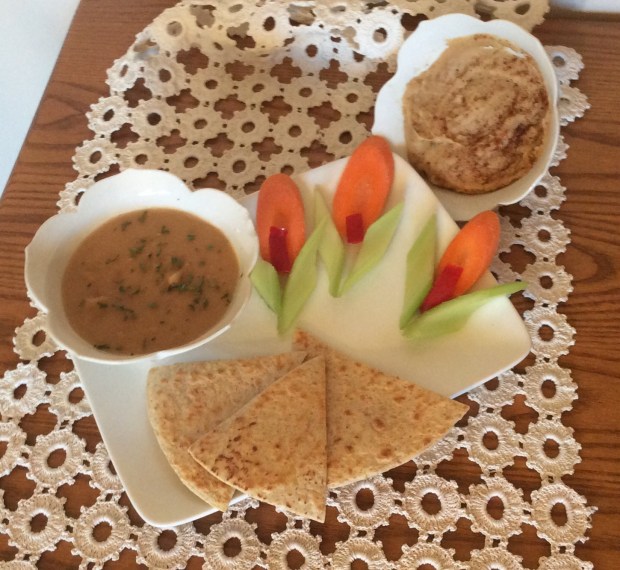
Not surprising to anyone who has seen my posts, I’m learning how to take pictures that properly highlight the foods I’m presenting. As you can see from this post, I still have a good deal of work ahead of me 😊 but the dish itself is so tasty, I wanted to share the recipe now.

Recently, I wrote about ways to make creamy sauces without necessarily using milk or cream, and cannellini beans are a preferred method of mine:

The Swaptastics, Part Three: Creamy Bean Sauces

because they’re one of the quickest ways to introduce a creamy element to a dish, especially if you don’t know whether you’re serving to people with nut allergies. However, I also love cheese, and occasionally mix the two together, either as a bean and cheese wrap, tossed into pasta, even … oatmeal. Really, it’s very good!

I started wondering if I could bring out the flavors found in a Welsh rarebit dip — which is a cheese dip layered with aromatic and savory mustard, ale, Worcestershire sauce and a kick of heat — but using beans for a significant part of the dairy. It turns out that I can’t make it look good (I can’t believe I ‘had’ to have flowers made from carrot, celery and pepper…) but I can make it taste incredibly yummy.

This starts as a creamy soup which acts nicely as an appetizer, or paired with a salad as a light lunch. However, with the addition of a little shredded cheese while the soup simmers, this soup transforms into the cheese dip which had me and my faithful testers scraping the bowl clean.

Creamy Welsh Rarebit Soup/Dip from a Blender!

Ingredients:

1 1/2 cups vegetable or chicken stock
4 cups cooked cannellini beans, rinsed and drained if from a can
1 bottle (about 1 cup) non-alcohol beer
1 teaspoon Mustard
3 teaspoons Worcestershire or soy sauce
1 1/4 teaspoons onion powder
8 shakes of Tabasco sauce or 1/4 teaspoon cayenne pepper
1/4 teaspoon salt
1/4 teaspoon pepper
FOR DIP ONLY: 1/2 cup shredded cheese like pepper jack or cheddar, divided

Procedure:

1. Place all but the optional ingredients in a blender and purée the mixture.

2. Pour contents into a large sauce pan (the beer will cause some lift during the initial cooking, so this can help avoid spillage) and bring contents to a boil.

3. Reduce to simmer and cook for 5 minutes. Taste and adjust salt and pepper if needed.

Here, you have a lovely soup that provides 4 one-cup servings. Serve accompanied with crackers or crudités of choice.

However, if you prefer the thicker texture for dipping, and to add a boost of flavor, now add in 1/4 cup of the shredded cheese and stir to incorporate. This mixture thickens quickly (as you can see in the picture, I could place the bowl on its side and it didn’t shift much at all) so only add the extra 1/4 cup of cheese if necessary.

Cream Sauce Monster Mashup: The Best of All Worlds

When I wrote my Swaptastics series recently, I started by thinking I could put the entire piece out in one fell swoop.

Then, I read it through. >blush<

If you’ve managed to get through everything else on this site, it’s probably not surprising that I’m known for being wordy. I’m working on it. 😉

I’m also known for being a bit nerdy in the research department, which is the reason for this post. As I researched the nutrition information for the various options for making Béchamel and alternative creamy sauces, I learned that the Béchamel sauce and its corresponding cheese sauce contain the best nutrition-to-calories ratio, followed by the butternut squash, nut sauces, and lastly, bean-based sauces.

That stated, depending on your preferred version of a creamy sauce, there’s plenty of room for achieving good balance with a ‘monster mashup’ of two or more sauces:

EASIEST: adding the butternut squash purée to any of the other sauces. You’ve likely seem scores of recipes online with butternut squash as a secret ingredient, and for good reason. It’s smooth and creamy, mildly sweet, low in calories, and contains a great amount of vitamin A and potassium.

RICHEST DEPTH OF FLAVOR: purée 1/4 cup soaked nuts to each cup of butternut purée. It’s terrific thinned with stock as a soup on a cool day, or as-is tossed into pasta or veggie noodles.

SMOOTHEST RESULT: For anyone with dairy and nut issues, the butternut squash and bean purées also work well in combination, in fact they provide the smoothest texture of the bunch, but you’ll have fewer nutrients than the other combinations.

I hope you try some of these sauce alternatives and monster mashups! Please let me know your thoughts if you do!

Meanwhile, what are your favorite sauces?

The Swaptastics, Part Four: Creamy Root Vegetable Soup/Sauce

Welcome back! In this final portion of Swaptastics, I am focusing on puréed root vegetables that can act as a substitute for sauce. My favorites are potatoes and butternut squash, which can mimic the appearance of some standard sauces.

~~~~~~~~~~~~~~~~
Creamy Root Vegetable Soup/Sauce

Prep time: 15 minutes
Cook time: ~ 25 minutes
Inactive time: 15 minutes

~~~~~~~~~~~~
INGREDIENTS:
Butternut Squash
~~~~~~~~~~~~

2 tablespoons olive oil
1/4 cup water
2 cloves garlic, whole
1 medium sweet onion, roughly chopped
1 teaspoon onion powder
1 large butternut squash, peeled, seeded and diced
2 cups vegetable stock
Pinch pepper of choice
2 teaspoons Salt, plus more to taste

~~~~~~~~~~~~
INGREDIENTS:
White Potato
~~~~~~~~~~~~

2 tablespoons olive oil
1/4 cup water
1 small sweet onion, roughly chopped
2 cloves garlic, whole
1 teaspoon onion powder
3 medium-sized potatoes, peeled and diced
1 cup vegetable stock
1 cup water
Pinch pepper of choice
1 teaspoon salt, plus more to taste

~~~~~~~~~~
STEPS: Both
~~~~~~~~~~

1. In a medium-sized pan, add in the first 1/4 cup water, olive oil and onion and cook on medium heat for 5 minutes, softening the onion. Add in the garlic cloves and stir frequently for 2 minutes.

2. Add in the diced root vegetable you’re using, salt, pepper, and the stock or stock-water combination (depending on the vegetable). Bring mixture to a boil, then simmer for 15-20 minutes to soften the vegetable.

3. Taste and adjust seasonings, then cool the mixture for 15 minutes to make it safe to purée.

4. If using a blender, you’ll need to purée in batches, filling the blender no more than 3/4 of the way and ensuring there is 1/4 cup water or stock at the base to keep the motor running properly. Hold the lid down tightly as you purée the mixture.

Once the blending is complete, you have a mixture that can be used just like any creamy sauce.

~~~~~~~~~~

Fun Facts and Figures

To make the sauce costs between $3-5, depending on whether you use potato or squash. The price for purchasing all ingredients for the first time is $10-12, depending on whether you use potato or squash and, after making the sauce, there’s still most of the other ingredients left to use in other recipes. The breakdown:

Olive oil: $4 for the bottle
Garlic: $0.50 for a whole bulb
Salt: $1
White pepper: $1
Onion powder: $1
White potato: $2-4 depending on type of potato
Butternut squash: $3

~~~~~~~~~
NUTRITION
~~~~~~~~~

White potato, peeled, 1 cup

258 calories
60 grams carbs (5.4 grams fiber)
0.3 grams fat
0.1 grams Saturated
0 grams Monounsaturated
0.1 grams Polyunsaturated
Protein 5.1 grams
Potassium 984 mg
Omega 3 fatty acids 30 mg
Omega 6 fatty acids 96 mg
Calcium 24 mg
Magnesium 60 mg
Vitamin C 22.2 mg

~~~~~~~~~~

Butternut squash, 1 cup

82 calories
21.5 grams carbs ( 0 fiber)
0.2 grams fat
0 grams Saturated
0 grams Monounsaturated
0.1 grams Polyunsaturated
Protein 2 grams
Potassium 582 mg
Omega 3 fatty acids 49.2 mg
Omega 6 fatty acids 28.7 mg
Calcium 84 mg
Magnesium 59.4 mg
Vitamin A 22,869 IU
Vitamin C 31 mg

~~~~~~~~~~~

Nutrition facts gathered from purchased product labels and supplemented with information supplied by http://nutritiondata.self.com.

The Swaptastics, Part Three: Creamy Bean Sauces

image

Welcome back! When we last met, the subject had turned from béchamel and subsequent cheese sauce to a nut-based variety. In this section, cannellini beans become the new creamy base, as an alternative for those with nut allergies.

Above, you see the memela picture I included in my Mad for Memelas post: https://thefoodpuzzler.com/2016/02/02/mad-for-memelas/ The creamy white sauce is made using the recipe below.

Puréed beans — or even store bought hummus — work amazingly well as a sauce base and can take nearly no time to prepare.

In this version, I’m using canned beans rather than cooking dried beans. Why? Time. As a Culinary instructor, I taught six classes per day lasting 52 minutes, so activities had to be designed to be completed within that timeframe. However, in the future I’ll outline how I have cooked beans from a dry state.

This creamy sauce is incredibly versatile. I’ve used it as the base of enchilada sauce and soups such as corn chowder. I’ve also used this mixture as a gravy substitute when making pot pies, and with chopped cooked spinach and artichokes for a vegan version of the classic dip. Those recipes coming soon; below is a recipe for a basic creamy sauce.

~~~~~~~~~~~~~~~~
Basic Creamy Bean Sauce, Version One

Prep time: 5 minutes
Cook time: 10 minutes
Inactive time: 10 minutes
Serves 10

~~~~~~~~~~~~
INGREDIENTS
~~~~~~~~~~~~

2 tablespoons olive oil
2 cloves garlic, whole
1 teaspoon onion powder, plus more to taste
2-15 ounce cans cannellini beans, drained and rinsed
Salt to taste
Pepper* to taste
1 cup water, plus more if needed

~~~~~~~~~~
STEPS
~~~~~~~~~~

1. In a medium-sized pan, on a medium heat, warm your olive oil and garlic cloves for 2 minutes. Stir frequently to prevent the garlic from burning. Remove from heat and cool 2 minutes. This is to prevent an issue when you add in your water in the next step.

2. Add in the drained and rinsed beans, water, onion powder, salt and pepper and stir to combine. Bring mixture to a boil, then simmer for 5 minutes, tasting and adjusting the seasonings to your preference.

*NOTE: White pepper has a much stronger flavor and aroma than black pepper. However, for cream-based sauces and mashed cauliflower, celery root, or potatoes, restaurants opt for white pepper because it blends seamlessly and is not visible. I’m more a fan of black pepper’s flavor so when cooking at home that’s what I use. If you prefer white pepper, start with pinches (1/8th teaspoon) and adjust after tasting.

3. Cool the mixture a bit before you place it in your blender or food processor. If using a blender, you’ll need to purée in batches, filling the blender no more than 3/4 of the way and ensuring there is 1/4 cup water at the base to keep the motor running properly. Hold the lid down tightly as you purée the mixture.

Once the blending is complete, you have a mixture that can be used just like any creamy sauce. Above, the memela is topped first with vegetable chili and salsa, then the creamy bean sauce, and lastly a sriracha swirl and chives.

~~~~~~~~~~

Fun Facts and Figures

To make the sauce costs $3.50. The price for purchasing all ingredients for the first time is $10 and, after making the sauce, there’s still most of the other ingredients left to use in other recipes. The breakdown:

Olive oil: $4 for the bottle
Garlic: $0.50 for a whole bulb
Salt: $1
White pepper: $1
Onion powder: $1
2-15 ounce cans cannellini beans: $2

~~~~~~~~~~

In terms of nutrition, beans are a good source of carbs, potassium and, if accompanied with rice, ‘complete protein’ with the nine essential amino acids also found in animal proteins.

~~~~~~~~~~
Based on a 1/4 cup (two ounce) serving
~~~~~~~~~~

Basic Creamy Bean Sauce
75 calories
9.5 grams carbohydrates (3 grams fiber)
3 grams fat
0.4 grams Saturated
0.4 grams Monounsaturated
2 grams Polyunsaturated
Protein 3.5 grams
Potassium 135 mg

~~~~~~~~~~~

Nutrition facts gathered from purchased product labels and supplemented with information supplied by http://nutritiondata.self.com.

The Swaptastics, Part Two: Nut-Based ‘Cream’ Sauce


Welcome back! When we last met, the subject was béchamel sauce and subsequent cheese sauce, along with a recipe, some suggested uses, pricing and nutrition information. In this section, I explore the basic creamy nut-based sauces using walnuts, almonds, and cashews in the same light. Above, you see a cashew ‘cream’ served over orecchiette pasta and topped with smoky roasted mushrooms.

Why did I go in this direction? As a teacher, I occasionally had students interested in vegetarian and vegan cooking, but without using soy. In addition to research, I started trying foods at restaurants where nuts act in a variety of forms, from fillings to sauces. I was delightfully surprised at how easily nuts could be turned into their dairy counterparts, and started playing around on my own.

~~~~~~~~~~~~~~~~
Basic Nut-based Creamy Sauce

Inactive prep time: 8 hours or overnight (soaking the nuts)
Prep time: 5 minutes
Cook time: 5 minutes

~~~~~~~~~~~~
INGREDIENTS
~~~~~~~~~~~~

1 pound bag of Unsalted Walnuts, Almonds or Cashews (or a combination of the three)
Salt and pepper* to taste
1/2 teaspoon Onion powder, plus more to taste
1/2 teaspoon Garlic powder, plus more to taste

~~~~~~~~~~
STEPS
~~~~~~~~~~

1. In a container with a secure lid, place the nuts you’ve selected as well as enough water to cover, and place in the refrigerator for at least 8 hours or overnight. This ensures a much smoother consistency, but if you want to skip this step, I’ve had luck bringing the same ratio of water and nuts to a boil for about 10 minutes. The mixture isn’t as smooth but it’s still delicious!

2. When ready to make your creamy sauce, drain and rinse off the nuts whichever method above you used above. Place in a food processor or blender with one cup cold water. Blend or process until smooth, adding in more water if necessary.

3. Pour the contents into a small sauce pan and add in pinches of the salt and white pepper along with the 1/2 teaspoons of garlic and onion powder. Warm as you mix the spices into the nut purée, taste and adjust the seasonings.

~~~~~~~~~~

NOTES and NUTRITION

~~~~~~~~~~

~ The price for making the nut-based sauce is overall more expensive than for the cheese sauce. To make the sauce costs between $9-11. For another $1 you can get a pound of pasta, cook half and toss with the sauce, serving 2-3 people with another half pound of pasta leftover for another time. For another $2 instead, make veggie noodles from a couple of zucchini and toss with the sauce and also serve 2-3 people.

The price for purchasing all ingredients for the first time is between $11-13, depending on which nut you choose.

Walnuts 1 pound bag: $8
Almonds 1 pound bag: $9
Cashews 1 pound bag: $10
Salt: $1
White pepper: $1
Onion powder: $1
Garlic powder: $1

~~~~~~~~~~

~ as mentioned previously, white pepper has a much stronger flavor and aroma than black pepper. However, for cream-based sauces and mashed cauliflower, celery root, or potatoes, restaurants opt for white pepper because it blends seamlessly and is not visible. I’m more a fan of black pepper’s flavor so when cooking at home that’s what I use. If you prefer white pepper, start with pinches (1/8th teaspoon) and adjust after tasting.

~~~~~~~~~~

Nutrition information is a catch-22. Nuts are cholesterol-free, rich in omega 3 and omega 6 fatty acids, potassium and even calcium, but on the flip side they are also high in fat and calories. This is a flavorful sauce base, and I’ve used them for numerous items including cheese sauce, spicy garlic sauce and enchilada sauce, but it’s best to eat them in moderation.

~~~~~~~~~~
Based on a 1/4 cup (two ounce) serving of the sauce
~~~~~~~~~~

Walnut Sauce
366 calories
8 grams carbohydrates (4 grams fiber)
36 grams fat
3.4 grams Saturated
5 grams Monounsaturated
26 grams Polyunsaturated
Protein 8.6 grams
Potassium 246 mg
Omega 3 fatty acids 5,130 mg
Omega 6 fatty acids 21,442 mg
Calcium 54 grams
Magnesium 88 mg

~~~~~~~~~~

Almond Sauce
326 calories
12 grams carbohydrates (7 grams fiber)
28 grams fat
2 grams Saturated
7 grams Monounsaturated
18 grams Polyunsaturated
Protein 12 grams
Potassium 400 mg
Omega 3 fatty acids 3 mg
Omega 6 fatty acids 6816 mg
Calcium 150 grams
Magnesium 152 mg

~~~~~~~~~~

Cashew Sauce
310 calories
18.4 grams carbohydrates (2 grams fiber)
24.6 grams fat
4.4 grams Saturated
13.4 grams Monounsaturated
4.4 grams Polyunsaturated
Protein 10 grams
Potassium 370 mg
Omega 3 fatty acids 35 mg
Omega 6 fatty acids 4362 mg
Calcium 21 grams
Magnesium 164 mg

~~~~~~~~~~

Nutrition facts gathered from purchased product labels and supplemented with information supplied by http://nutritiondata.self.com.